Digital marketing has become one of the most effective ways for businesses to reach customers, build brand awareness, and increase sales. Whether you own a small business, run a startup, or want to build a career in marketing, understanding digital marketing is an important first step.
But where should you begin? Which platforms should you use? And how can you attract customers online?
In this beginner-friendly guide, we will explain the basics of digital marketing, its different types, useful strategies, and how you can get started.
What Is Digital Marketing?
Digital marketing is the process of promoting products, services, or brands through online platforms and digital channels. It allows businesses to connect with their target audience through search engines, social media, websites, emails, and online advertisements.
Unlike traditional marketing methods such as newspapers, banners, and television advertisements, digital marketing makes it easier to reach specific audiences and measure campaign performance.
For example, when someone searches for a website developer on Google and finds your business, that is digital marketing in action.
Why Is Digital Marketing Important for Businesses?
Today, customers often search online before purchasing a product or service. Having a strong digital presence helps businesses reach potential customers where they already spend their time.
Here are some major benefits:
Wider Reach: Connect with customers beyond your local area.
Cost-Effective Marketing: Start campaigns with flexible budgets.
Targeted Advertising: Reach audiences based on location, interests, and behaviour.
Brand Awareness: Build recognition and trust through consistent online activity.
Measurable Results: Track website visits, clicks, leads, and conversions.
Better Customer Engagement: Communicate directly with customers through social media and other digital channels.
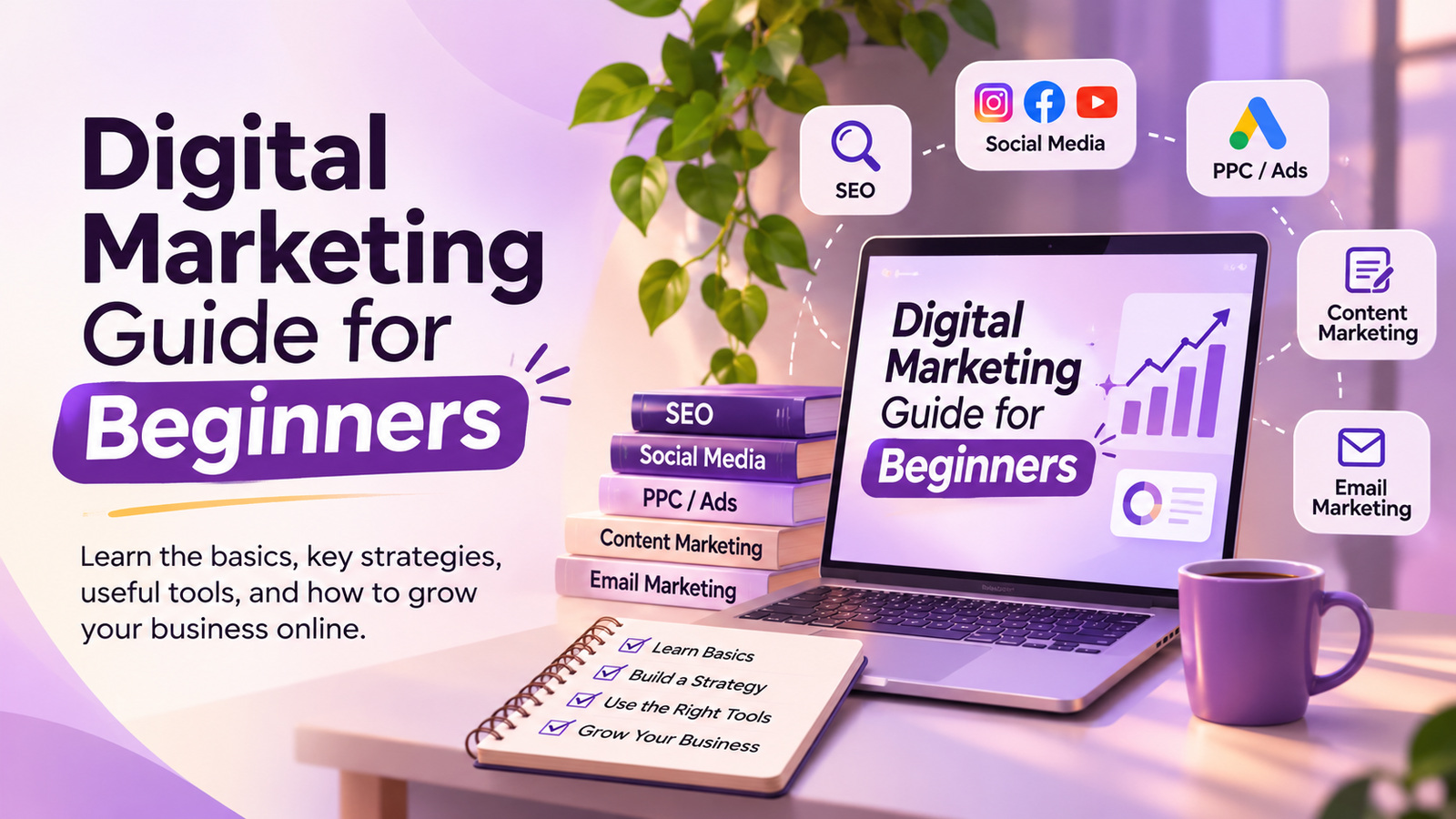
7 Types of Digital Marketing You Should Know
Understanding the different types of digital marketing will help you choose the right strategies for your business.
1. Search Engine Optimization (SEO)
SEO is the process of improving your website so that it appears higher in search engine results when people search for relevant products or services.
For example, if you offer web development services, you may want your website to appear when someone searches for "website developer near me."
SEO generally includes:
Keyword research
On-page SEO
Technical SEO
Quality content creation
Link building
SEO is a long-term strategy that helps attract organic website traffic without paying for every click.
2. Social Media Marketing
Social media marketing involves promoting your business through platforms such as Instagram, Facebook, LinkedIn, and YouTube.
Businesses use social media to share updates, showcase products, publish reels, engage with customers, and build a loyal audience.
A consistent social media strategy can help improve brand visibility and generate potential leads.
3. Pay-Per-Click Advertising (PPC)
PPC advertising allows businesses to display paid advertisements on search engines and other digital platforms.
Google Ads is a popular example. Businesses can display their advertisements when users search for specific keywords.
You generally pay when someone clicks on your advertisement, making it easier to control advertising budgets and track results.
4. Content Marketing
Content marketing focuses on creating valuable and informative content to attract and engage your target audience.
Examples include:
Blog articles
Videos and tutorials
Infographics
Case studies
Social media posts
Useful content helps establish your business as a reliable source of information and supports your SEO strategy.
5. Email Marketing
Email marketing allows businesses to communicate directly with customers through emails.
It can be used for sharing product updates, promotional offers, newsletters, announcements, and follow-up messages.
Personalised and relevant emails can help businesses maintain customer relationships and encourage repeat purchases.
6. Affiliate Marketing
Affiliate marketing is a strategy where individuals or businesses promote another company's products or services and earn a commission for successful referrals or sales.
It is commonly used by bloggers, content creators, influencers, and online publishers.
7. Influencer Marketing
Influencer marketing involves collaborating with content creators who have an established audience on social media.
Businesses partner with influencers to promote their products or services through reviews, recommendations, reels, and sponsored content.
How to Start Digital Marketing as a Beginner
You do not need a huge budget or advanced technical knowledge to begin. Start with these practical steps:
Step 1: Understand Your Target Audience
Identify who your potential customers are, what they need, and which online platforms they use.
Step 2: Create a Professional Website
Your website acts as your online business identity. Make sure it is mobile-friendly, easy to navigate, fast-loading, and provides clear information about your products or services.
Step 3: Set Up Social Media Profiles
Choose platforms that match your target audience. Create professional business profiles and share relevant content consistently.
Step 4: Learn Basic SEO
Research relevant keywords, optimise your website pages, write informative blogs, and improve your website structure.
Step 5: Start Creating Content
Publish useful blogs, videos, graphics, and social media posts that answer your audience's questions and solve their problems.
Step 6: Experiment with Paid Advertising
Once you understand your audience, try small advertising campaigns through Google Ads or Meta Ads. Monitor performance before increasing your budget.
Step 7: Track Your Results
Use tools such as Google Analytics 4 and Google Search Console to understand website traffic, search performance, and user behaviour.
Best Digital Marketing Tools for Beginners
The right tools can make digital marketing easier and more organised.
ToolPurposeGoogle Analytics 4Website traffic analysisGoogle Search ConsoleSEO and search performanceCanvaGraphic designGoogle Keyword PlannerKeyword researchMeta Business SuiteFacebook and Instagram managementMailchimpEmail marketingGoogle AdsPaid search advertisingMany of these tools offer free features that beginners can use to develop their marketing skills.
Common Digital Marketing Mistakes to Avoid
Beginners often make mistakes that affect their marketing results. Avoid these common issues:
Trying to target everyone instead of a specific audience.
Ignoring SEO while focusing only on social media.
Posting content without a proper strategy.
Spending on advertisements without setting clear goals.
Not analysing campaign performance.
Expecting immediate results from long-term strategies.
Ignoring website speed and mobile responsiveness.
Remember, successful digital marketing requires consistency, planning, and continuous improvement.
Final Thoughts
Digital marketing offers exciting opportunities for businesses and individuals looking to grow online. From SEO and social media marketing to paid advertising and content creation, every channel plays an important role in building a strong digital presence.
If you are a beginner, start with the basics, understand your audience, experiment with different strategies, and regularly measure your results.
The key is not to use every marketing channel at once but to choose the right ones for your goals and use them effectively.
Looking to grow your business online?
At Digital Shreyas, we help businesses build their online presence with professional website development, SEO, and digital marketing solutions.
Visit our website to explore how we can help your business grow.
Website: https://digitalshreyas.com/
Frequently Asked Questions (FAQs)
1. What is digital marketing in simple words?
Digital marketing means promoting products, services, or businesses using online platforms such as Google, social media, websites, and email.
2. Can beginners learn digital marketing?
Yes. Anyone can learn digital marketing by understanding its fundamentals, practising with available tools, and gaining hands-on experience.
3. Is digital marketing free?
Some digital marketing methods, such as organic SEO and social media content creation, can be started without advertising costs. Paid advertising and certain marketing tools require a budget.
4. Which digital marketing skill should I learn first?
SEO, content creation, and social media marketing are good starting points because they help you understand online audiences and how businesses attract customers.
5. How long does digital marketing take to show results?
It depends on the strategy. Paid advertisements can generate traffic quickly, while SEO and organic content marketing generally require consistent effort over several months.
6. Which tools are useful for digital marketing beginners?
Google Analytics 4, Google Search Console, Canva, Google Keyword Planner, and Meta Business Suite are useful tools to start with.